
Unlock Peak Performance: Master the Art of Compilation
From source code to optimized executables. Dive deep into compiler theory, build automation, and performance tuning for modern software development.
Explore TutorialsFeatured Guides & Tutorials
Practical guides to enhance your build processes across various ecosystems.

Precompilation & Build Automation
Master tools like Make, CMake, and Bazel. Learn to create efficient, reproducible builds for complex C++ projects and beyond.
Learn More →
JIT vs. AOT Compilation
Explore the trade-offs between Just-In-Time (JIT) and Ahead-Of-Time (AOT) compilation in environments like Java, .NET, and GraalVM.
Explore Concepts →
Modern Web Transpilation
Dive into the world of Babel, TypeScript, and bundlers like Webpack/Vite. Understand how modern JavaScript gets to the browser.
Read Guide →Deep Dive into Compiler Theory
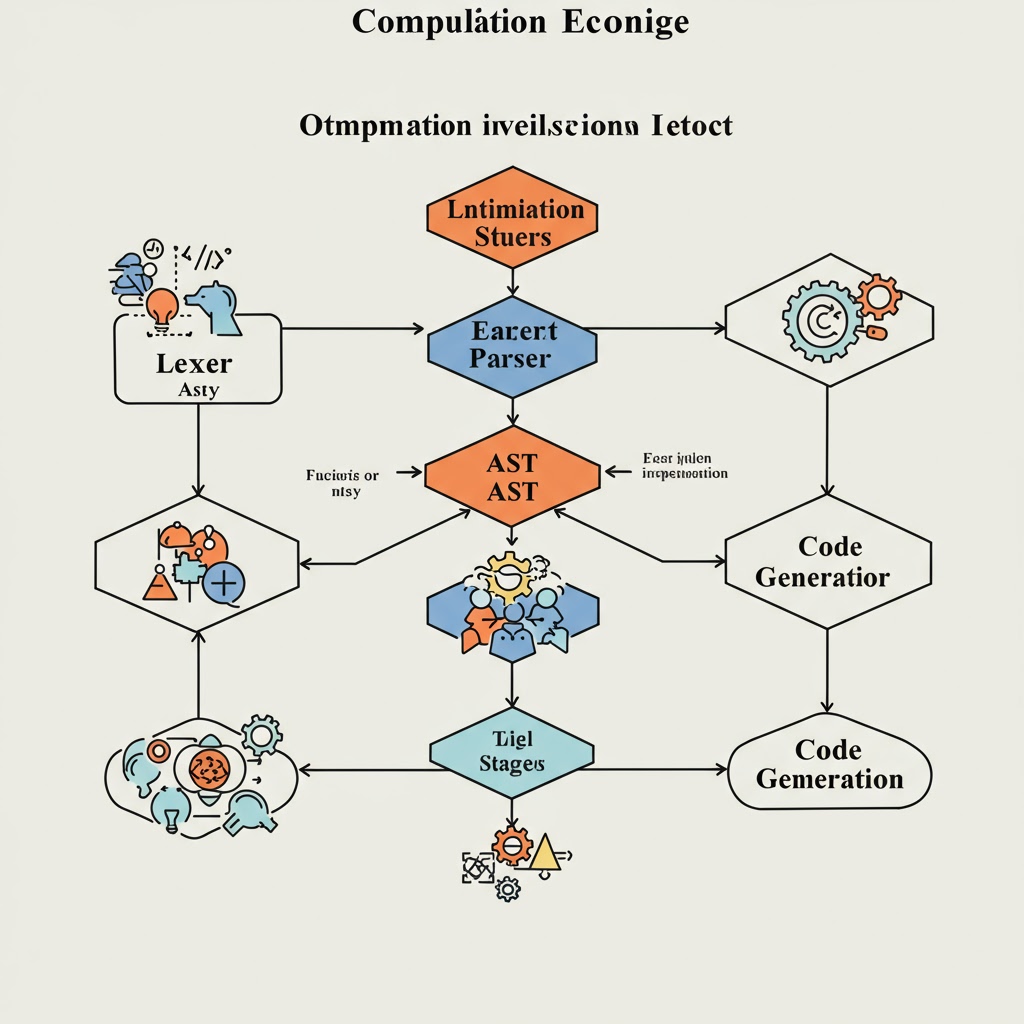
Understanding what happens under the hood is key to writing truly high-performance code. Explore the fundamental stages of the compilation pipeline.
-
Lexical Analysis & Parsing: From raw text to a structured Abstract Syntax Tree (AST).
-
Semantic Analysis: Type checking and ensuring the code makes logical sense.
-
Optimization: The magic of loop unrolling, inlining, and dead code elimination.
-
Code Generation: Translating optimized intermediate representation to machine code.
Strategies for Performance Tuning
Leverage compiler flags, profiling tools, and language features to squeeze every drop of performance from your applications.
Compiler Flags & Directives
Learn to use flags like `-O3` in GCC/Clang, profile-guided optimization (PGO), and link-time optimization (LTO) to produce highly optimized binaries.
Profiling and Analysis
Master tools like Perf, Valgrind, and language-specific profilers to identify bottlenecks and guide your optimization efforts effectively.
Memory Layout & Data Locality
Understand how compilers handle memory and how you can structure your data to take full advantage of CPU caches and reduce latency.
Advanced Language Features
Explore concepts like C++ templates, Java's Project Valhalla, and SIMD intrinsics to write code that compilers can turn into lightning-fast instructions.